What load shifting looks like at a wastewater treatment plant
Most WWTPs already have the physical flexibility to lower electricity cost: within their current tariff, under a new offer, or, where there is appetite for it, on the spot market. What is usually missing is a credible, plant-specific answer to what that flexibility is actually worth.
Where the flexibility lives
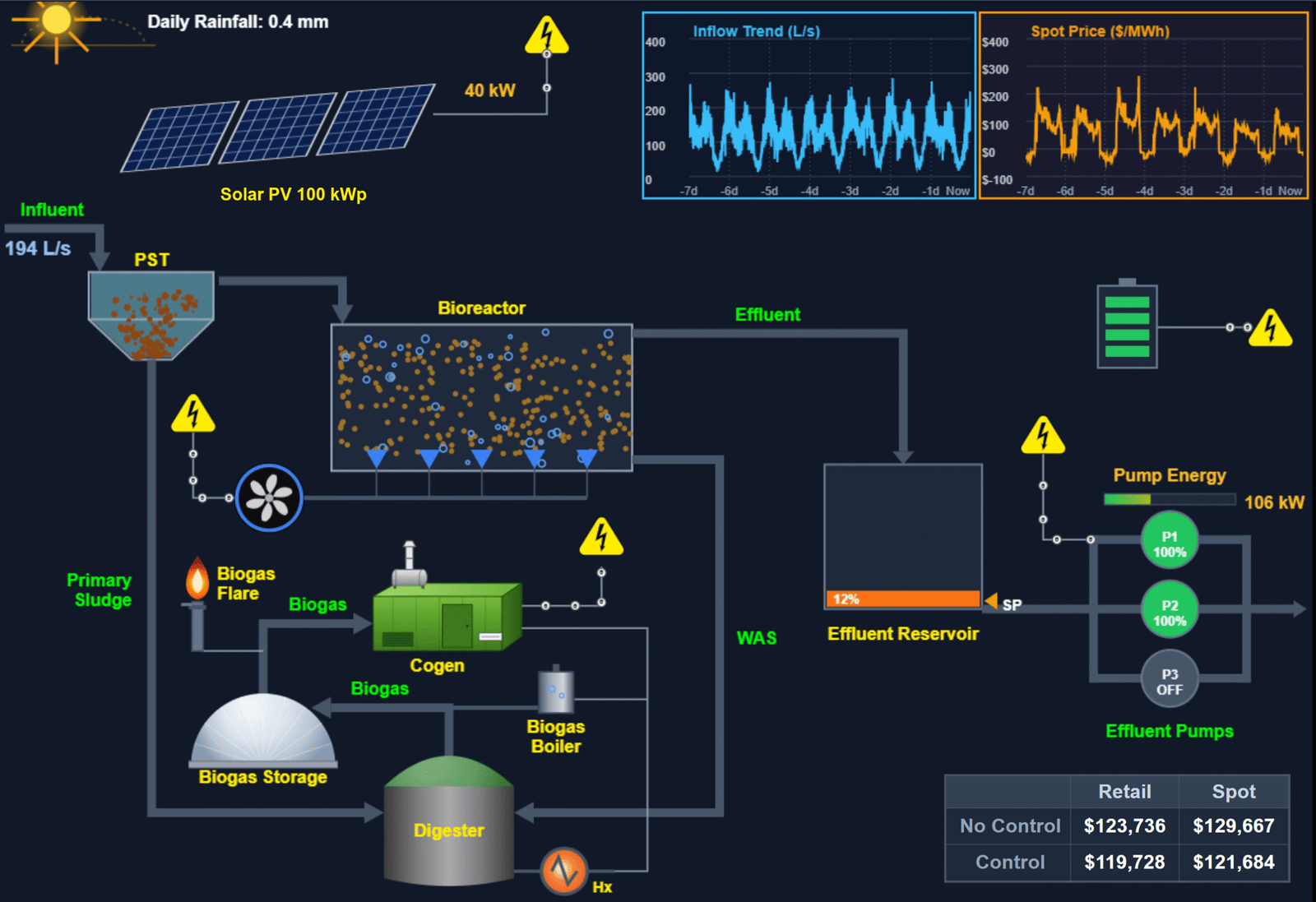
Timing flexibility exists because the process holds inventory. How much value each lever offers depends entirely on your plant. Some have all, some have no digestion at all. The assessment starts from what you have.
Effluent pumping
Shifting pumping load to cheaper TOU periods or away from demand peaks, and, where spot-exposed, to low-price 5-minute intervals, within operating limits.
Dewatering & sludge storage
Batching dewatering runs to cheaper periods using intermediate sludge storage as a buffer, within process and odour constraints.
Blower control
Adjusting blower speed within dissolved oxygen tolerances for short-duration flexibility without compromising treatment performance.
Biogas & cogeneration
Storing biogas and dispatching the engine when it is worth more to generate than to import, against TOU, demand or spot, not on a fixed schedule.
Solar PV & battery
Dispatching variable generation and storage against the same effective cost as the rest of the plant.
Why a generic estimate is not good enough
Without a quantified case, a good idea stays unfunded. Cogeneration or digestion upgrades on smaller plants than would normally justify them cannot get through a board or council without it.
What is difficult is not finding a theoretical saving but proving it respects real constraints. Equipment that cannot be started or stopped frequently without accelerated wear needs a scheme that respects duty cycles, not one that chases every price movement. Any change must be checked against the process itself. Saving on electricity that destabilises effluent quality is not a saving.
That needs a simulation of your flexibility against real market and tariff data, checked against your real operating limits, whether the route is within your current tariff, under an alternate offer or on the spot market. See how the controller respects process limits →
What a feasibility assessment involves
It follows the same process used across all Energy Management work: assessment, simulation, business case, then implementation where it stacks up. See How We Work for the full process. For a WWTP, that starts with your operations team: pump curves, DO tolerances, storage and generation assets, so the simulation reflects what your plant can actually do, not a generic model.
What makes this analysis different
Built from research into control and optimisation of integrated wastewater treatment and energy systems, with published work on energy shifting in WWTPs. The pricing engine uses actual 5-minute settlement data, not averaged figures, and is combined with market-aware forecasting tested against AEMO: forecasting →
It brings both sides together: WWTP operation (major upgrade delivery) and market participation (energy-sector engineering planning). Applicable beyond wastewater to any plant with schedulable load: pumping, compression, refrigeration, batch processing. See FAQ.
Who this is for
Water utilities and councils with pumping, aeration or digestion assets who want a quantified, defensible answer on whether load shifting, within the current tariff, under a new offer, or with spot exposure, is worth pursuing, particularly where a smaller plant is weighing up digestion/cogeneration that only stacks up when the energy value is properly included.